Pascale Tessier
2025-04-23
Gamification
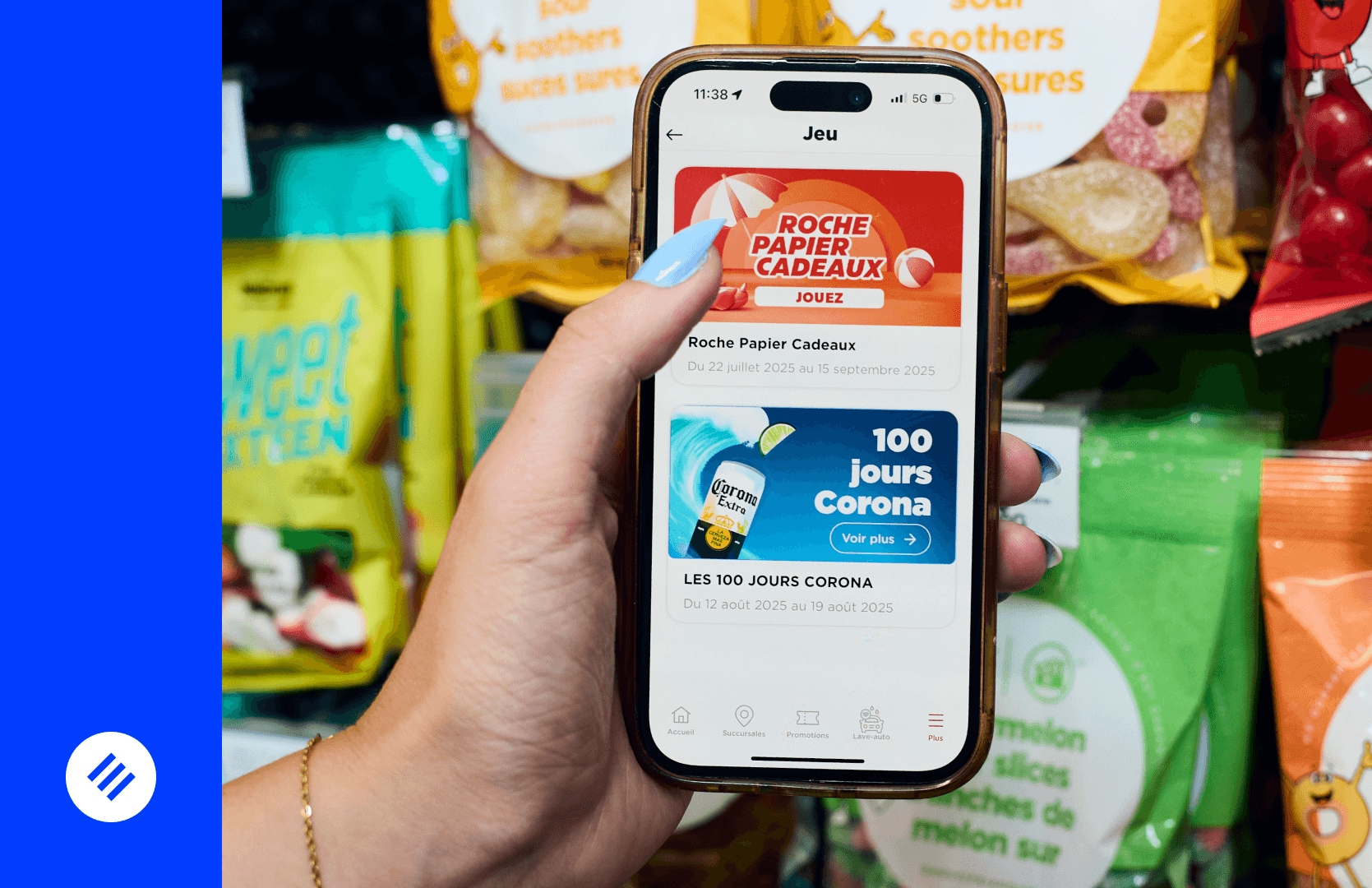
Far beyond just playfulness, gamification is a powerful experiential strategy for positively influencing behavior.
An engaging user experience is essential to an app’s success. Gamification involves integrating game mechanics (points, leaderboards, challenges, badges, rewards, even mini-games) into non-game environments—such as a mobile app, an e-learning platform, a website, or a loyalty program—to spark participation, boost engagement, and encourage repeat use.
Far beyond just playfulness, gamification is a powerful experiential strategy for positively influencing behavior. By promoting interactivity, progression, and a sense of accomplishment, it transforms the user experience into a lever for performance, learning, and growth.
And the numbers speak for themselves: for example, Pandora multiplied its subscriptions by seven after adding gamified elements to its sign-up widgets. This approach not only increased subscription volume, but also improved monthly revenue and active-user engagement.
When it comes to a mobile app, embedding playful features brings many advantages—but it must be done thoughtfully. Over the years at Thirdbridge, we always approach the addition of these strategies to a digital product in one of three ways:
Individual
Individual gamification tactics focus entirely on the user’s behavior, without necessarily requiring a tangible reward. Simply seeing one’s progress or completing a task can generate satisfaction and strengthen attachment to the app. This is an ideal approach for engaging users from the very first moments by giving them a rewarding experience.
In this context, some brands rely on interactive tools like quizzes or intelligent recommendations. Others use personalized interfaces to deepen user engagement. Strava, for example, offers a customized dashboard that displays real-time key statistics—distance covered, pace, activity frequency, and week-over-week progress. This kind of view lets users track their performance, set goals, and stay motivated, while making the experience more interactive and rewarding.
To maximize impact when adopting an individual strategy, it’s smart to introduce micro-challenges, progress indicators, or badges tied to simple actions—completing a profile, exploring a feature, or making a first purchase. This approach makes the user journey more engaging while forging a positive connection with your brand.
Reciprocal
Reciprocal gamification tactics are based on an exchange principle: the user performs an action and receives a reward in return. This strategy is very popular in retail because it allows brands to quickly reward a specific behavior—completing a profile, creating a wish list, or making a purchase.
One of the standout features of the Circle K app is its rewards program, which allows users to earn points with every purchase. Each dollar spent translates into points that can be redeemed for discounts, free items, or special promotions, making it a great way to save money while enjoying your favorite snacks and drinks.
To get started, a company can launch simple campaigns, for example: “Create your profile and get 10% off” or “Add three items to your wishlist for a chance to win them.” These exchanges, though basic, are often highly effective at accelerating app adoption and encouraging repeat behaviors.
Relational
Relational gamification tactics aim to strengthen bonds between users themselves or between users and their community. They rely on social mechanisms like competition, collaboration, or highlighting shared content. By fostering community dynamics, they enable brands to multiply engagement while increasing the organic reach of their marketing efforts.
Again, the Strava app is an excellent example of relational gamification. Beyond individual gamification and the personalized dashboard, Strava has positioned itself as a social network for sports through activity sharing, the ability to join clubs, and participation in group challenges.
To implement: community challenges, rewards for social shares, or leaderboards to spark friendly competition among users. This type of gamification is particularly powerful for creating a lasting network effect and turning active users into brand ambassadors.
Where Is Gamification Relevant?
Gamification finds its place in many industries, even those where you might not naturally think to use it. Here are a few examples:
Learning apps: Platforms like Duolingo or Kahoot integrate daily challenges, points, and progression systems.
Retail: Gamified loyalty programs increase customer lifetime value and purchase frequency.
Health & wellness: Apps like Fitbit or Strava use step challenges, progress badges, and community comparisons to motivate users.
Corporate training: Interactive quizzes, skill badges, and gamified learning paths make training more engaging.
Civic engagement: Some platforms reward eco-friendly behaviors or community participation with points and recognition.
Thirdbridge Expertise
At Thirdbridge, we’ve developed a range of gamified solutions for our clients, creating interactive experiences that captivate and retain users. We know how to effectively integrate gamification into complex applications by combining strategy, UX/UI, and technological innovation.
Pascale Tessier
2025-04-23
Gamification
Far beyond just playfulness, gamification is a powerful experiential strategy for positively influencing behavior.
An engaging user experience is essential to an app’s success. Gamification involves integrating game mechanics (points, leaderboards, challenges, badges, rewards, even mini-games) into non-game environments—such as a mobile app, an e-learning platform, a website, or a loyalty program—to spark participation, boost engagement, and encourage repeat use.
Far beyond just playfulness, gamification is a powerful experiential strategy for positively influencing behavior. By promoting interactivity, progression, and a sense of accomplishment, it transforms the user experience into a lever for performance, learning, and growth.
And the numbers speak for themselves: for example, Pandora multiplied its subscriptions by seven after adding gamified elements to its sign-up widgets. This approach not only increased subscription volume, but also improved monthly revenue and active-user engagement.
When it comes to a mobile app, embedding playful features brings many advantages—but it must be done thoughtfully. Over the years at Thirdbridge, we always approach the addition of these strategies to a digital product in one of three ways:
Individual
Individual gamification tactics focus entirely on the user’s behavior, without necessarily requiring a tangible reward. Simply seeing one’s progress or completing a task can generate satisfaction and strengthen attachment to the app. This is an ideal approach for engaging users from the very first moments by giving them a rewarding experience.
In this context, some brands rely on interactive tools like quizzes or intelligent recommendations. Others use personalized interfaces to deepen user engagement. Strava, for example, offers a customized dashboard that displays real-time key statistics—distance covered, pace, activity frequency, and week-over-week progress. This kind of view lets users track their performance, set goals, and stay motivated, while making the experience more interactive and rewarding.
To maximize impact when adopting an individual strategy, it’s smart to introduce micro-challenges, progress indicators, or badges tied to simple actions—completing a profile, exploring a feature, or making a first purchase. This approach makes the user journey more engaging while forging a positive connection with your brand.
Reciprocal
Reciprocal gamification tactics are based on an exchange principle: the user performs an action and receives a reward in return. This strategy is very popular in retail because it allows brands to quickly reward a specific behavior—completing a profile, creating a wish list, or making a purchase.
One of the standout features of the Circle K app is its rewards program, which allows users to earn points with every purchase. Each dollar spent translates into points that can be redeemed for discounts, free items, or special promotions, making it a great way to save money while enjoying your favorite snacks and drinks.
To get started, a company can launch simple campaigns, for example: “Create your profile and get 10% off” or “Add three items to your wishlist for a chance to win them.” These exchanges, though basic, are often highly effective at accelerating app adoption and encouraging repeat behaviors.
Relational
Relational gamification tactics aim to strengthen bonds between users themselves or between users and their community. They rely on social mechanisms like competition, collaboration, or highlighting shared content. By fostering community dynamics, they enable brands to multiply engagement while increasing the organic reach of their marketing efforts.
Again, the Strava app is an excellent example of relational gamification. Beyond individual gamification and the personalized dashboard, Strava has positioned itself as a social network for sports through activity sharing, the ability to join clubs, and participation in group challenges.
To implement: community challenges, rewards for social shares, or leaderboards to spark friendly competition among users. This type of gamification is particularly powerful for creating a lasting network effect and turning active users into brand ambassadors.
Where Is Gamification Relevant?
Gamification finds its place in many industries, even those where you might not naturally think to use it. Here are a few examples:
Learning apps: Platforms like Duolingo or Kahoot integrate daily challenges, points, and progression systems.
Retail: Gamified loyalty programs increase customer lifetime value and purchase frequency.
Health & wellness: Apps like Fitbit or Strava use step challenges, progress badges, and community comparisons to motivate users.
Corporate training: Interactive quizzes, skill badges, and gamified learning paths make training more engaging.
Civic engagement: Some platforms reward eco-friendly behaviors or community participation with points and recognition.
Thirdbridge Expertise
At Thirdbridge, we’ve developed a range of gamified solutions for our clients, creating interactive experiences that captivate and retain users. We know how to effectively integrate gamification into complex applications by combining strategy, UX/UI, and technological innovation.
Pascale Tessier
2025-04-23
Gamification
Far beyond just playfulness, gamification is a powerful experiential strategy for positively influencing behavior.
An engaging user experience is essential to an app’s success. Gamification involves integrating game mechanics (points, leaderboards, challenges, badges, rewards, even mini-games) into non-game environments—such as a mobile app, an e-learning platform, a website, or a loyalty program—to spark participation, boost engagement, and encourage repeat use.
Far beyond just playfulness, gamification is a powerful experiential strategy for positively influencing behavior. By promoting interactivity, progression, and a sense of accomplishment, it transforms the user experience into a lever for performance, learning, and growth.
And the numbers speak for themselves: for example, Pandora multiplied its subscriptions by seven after adding gamified elements to its sign-up widgets. This approach not only increased subscription volume, but also improved monthly revenue and active-user engagement.
When it comes to a mobile app, embedding playful features brings many advantages—but it must be done thoughtfully. Over the years at Thirdbridge, we always approach the addition of these strategies to a digital product in one of three ways:
Individual
Individual gamification tactics focus entirely on the user’s behavior, without necessarily requiring a tangible reward. Simply seeing one’s progress or completing a task can generate satisfaction and strengthen attachment to the app. This is an ideal approach for engaging users from the very first moments by giving them a rewarding experience.
In this context, some brands rely on interactive tools like quizzes or intelligent recommendations. Others use personalized interfaces to deepen user engagement. Strava, for example, offers a customized dashboard that displays real-time key statistics—distance covered, pace, activity frequency, and week-over-week progress. This kind of view lets users track their performance, set goals, and stay motivated, while making the experience more interactive and rewarding.
To maximize impact when adopting an individual strategy, it’s smart to introduce micro-challenges, progress indicators, or badges tied to simple actions—completing a profile, exploring a feature, or making a first purchase. This approach makes the user journey more engaging while forging a positive connection with your brand.
Reciprocal
Reciprocal gamification tactics are based on an exchange principle: the user performs an action and receives a reward in return. This strategy is very popular in retail because it allows brands to quickly reward a specific behavior—completing a profile, creating a wish list, or making a purchase.
One of the standout features of the Circle K app is its rewards program, which allows users to earn points with every purchase. Each dollar spent translates into points that can be redeemed for discounts, free items, or special promotions, making it a great way to save money while enjoying your favorite snacks and drinks.
To get started, a company can launch simple campaigns, for example: “Create your profile and get 10% off” or “Add three items to your wishlist for a chance to win them.” These exchanges, though basic, are often highly effective at accelerating app adoption and encouraging repeat behaviors.
Relational
Relational gamification tactics aim to strengthen bonds between users themselves or between users and their community. They rely on social mechanisms like competition, collaboration, or highlighting shared content. By fostering community dynamics, they enable brands to multiply engagement while increasing the organic reach of their marketing efforts.
Again, the Strava app is an excellent example of relational gamification. Beyond individual gamification and the personalized dashboard, Strava has positioned itself as a social network for sports through activity sharing, the ability to join clubs, and participation in group challenges.
To implement: community challenges, rewards for social shares, or leaderboards to spark friendly competition among users. This type of gamification is particularly powerful for creating a lasting network effect and turning active users into brand ambassadors.
Where Is Gamification Relevant?
Gamification finds its place in many industries, even those where you might not naturally think to use it. Here are a few examples:
Learning apps: Platforms like Duolingo or Kahoot integrate daily challenges, points, and progression systems.
Retail: Gamified loyalty programs increase customer lifetime value and purchase frequency.
Health & wellness: Apps like Fitbit or Strava use step challenges, progress badges, and community comparisons to motivate users.
Corporate training: Interactive quizzes, skill badges, and gamified learning paths make training more engaging.
Civic engagement: Some platforms reward eco-friendly behaviors or community participation with points and recognition.
Thirdbridge Expertise
At Thirdbridge, we’ve developed a range of gamified solutions for our clients, creating interactive experiences that captivate and retain users. We know how to effectively integrate gamification into complex applications by combining strategy, UX/UI, and technological innovation.
Other articles







Other articles
Other articles
contact@thirdbridge.ca
+1 514 316 5399
1751 Rue Richardson Bureau 5.120, Montréal, QC H3K 1G6
330 Rue Saint-Vallier E suite 330, Québec, QC G1K
1475 North Scottsdale Road, Suite 200, Scottsdale, AZ 85257
contact@thirdbridge.ca
+1 514 316 5399
1751 Rue Richardson Bureau 5.120, Montréal, QC H3K 1G6
330 Rue Saint-Vallier E suite 330, Québec, QC G1K
1475 North Scottsdale Road, Suite 200, Scottsdale, AZ 85257
contact@thirdbridge.ca
+1 514 316 5399
1751 Rue Richardson Bureau 5.120, Montréal, QC H3K 1G6
330 Rue Saint-Vallier E suite 330, Québec, QC G1K
1475 North Scottsdale Road, Suite 200, Scottsdale, AZ 85257