Virginie Lavoie
2025-05-08
Personalizing the Mobile Experience: The 5 Essential Pillars

Users don’t have time to engage with experiences that aren’t aligned with their reality or interests. This shift in consumer behavior is forcing businesses to rethink their approach and design products that meet increasingly specific expectations.
Personalization must be at the heart of digital strategies to ensure the creation of experiences that are engaging, seamless, relevant, and tailored to user needs.
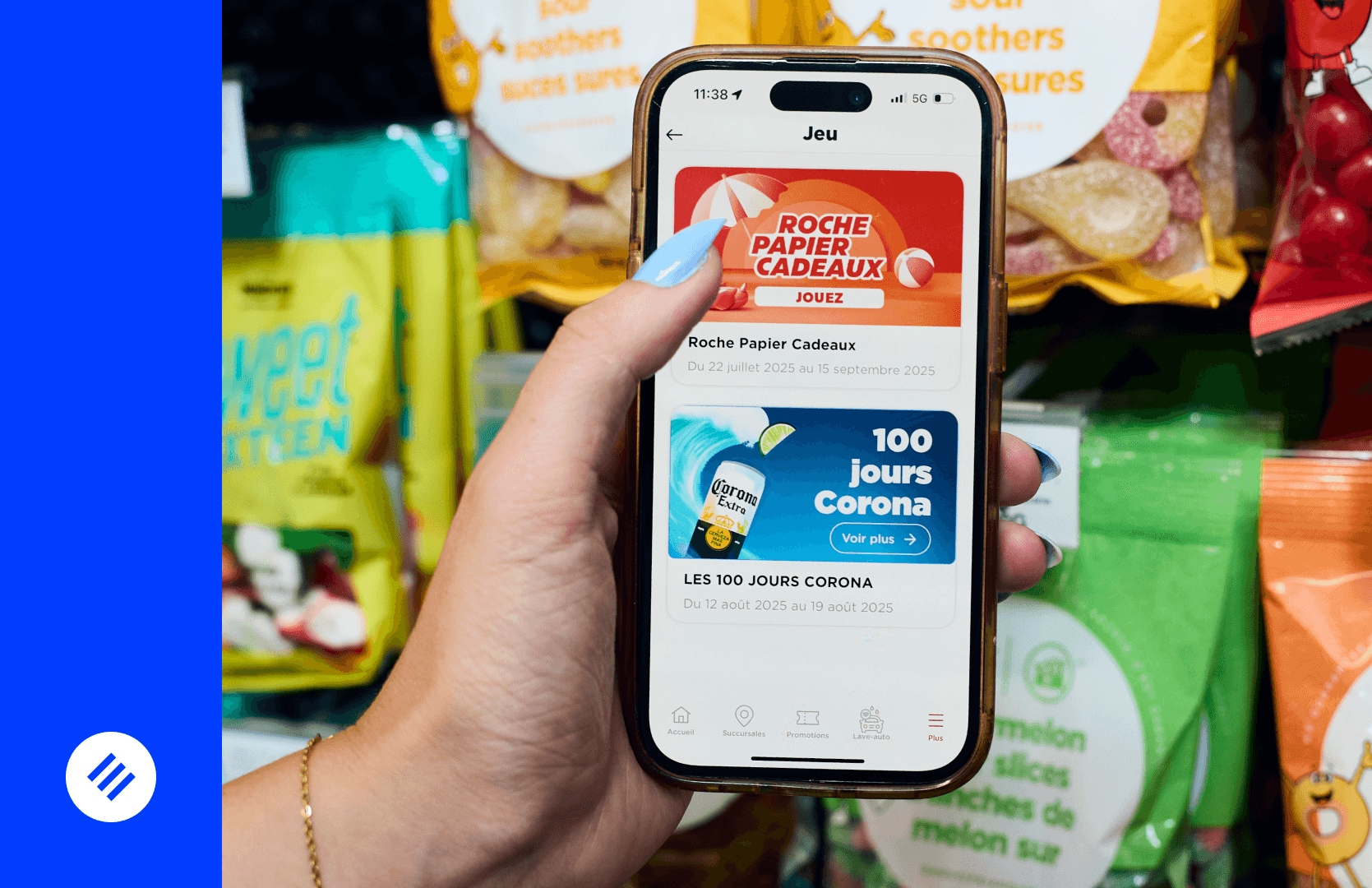
By working with retailers who use mobile apps as loyalty tools, we see their potential. It’s a unique lever, as the mobile app is a true goldmine of user data. Unlike in-store advertising or signage, it allows for 100% personalized content to be delivered at the right moment, directly into the user's pocket. The key lies in knowing how to harness that potential.
So what levers should be activated to personalize the experience effectively and encourage users to engage rather than delete the app after a single use?
To answer this, we’ll look at the excellent example of Flo, a women’s health app widely recognized for its thoughtful and relevant personalization. Flo is a great example of how well-crafted decisions can transform the user experience.
1. Push Notifications: Relevance and Timing
Push notifications are often underused or misused, yet they’re a powerful lever to re-engage users. They need to be contextual, targeted, and aligned with the user’s actual needs.
Take Flo, for example — the app sends personalized reminders related to the menstrual cycle, as well as preventative content or tips adapted to the current phase. This level of personalization turns the notification into a useful service that has a real impact on the user’s daily life.
To fully leverage this tool, it’s essential to integrate a notification system based on user events (e.g., a missed action, an unmet goal, a sensitive time) and automation. Don’t overlook the importance of allowing users to set their own notification preferences (frequency, timing, content type). Finally, make sure to analyze open and opt-out rates to continuously refine your strategy.
2. Recommended Content: Personalize the Value
A “one size fits all” approach no longer works when it comes to in-app content. Articles, videos, and services must be tailored to different profiles, goals, or behaviors to remain relevant.
In the Flo app, content varies based on age, goals (pregnancy, contraception, general well-being), or even symptoms logged, giving each user access to targeted, useful, and evolving information adapted to their reality.
To enable personalized content delivery, it’s crucial to rely on a dynamic content management system like a custom or headless CMS. This kind of system allows you to display content based on criteria like user profile, history, or preferences. The addition of smart tags (themes, intensity, format, expertise level, etc.) further sharpens the accuracy of recommendations. A rule engine or AI can then orchestrate the delivery of the most relevant content in real time.
3. Call to Action (CTA): Guide Rather Than Push
Personalizing CTAs helps guide users clearly while respecting their pace, priorities, and intentions. A well-crafted CTA should consider context, usage history, and the user journey stage.
Flo displays dynamic CTAs such as “log a symptom” or “check your predictions” based on previous actions, creating a seamless flow throughout the app experience.
CTAs can be smart by relying on conditional logic in the interface design. For instance, a button might change label or position depending on seasonality, user history, or journey stage. To identify the most effective versions, consider running A/B tests or alternate user flows, and track click-through, completion, and bounce rates.
4. Advertising: Make It Useful, Not Intrusive
Contrary to what one might think, advertising can enhance the user experience if it’s well-targeted. Delivering commercial messages or sponsored content that clearly aligns with users’ needs or interests is key.
Flo offers ads or partnerships related to women’s health, selected based on interests, cycle phase, or user goals — enhancing the experience while generating value.
The key is to leverage in-app behavioral data to deliver advertising messages that match each user’s profile, intent, and context. Using an audience management platform (CDP or DMP) to dynamically segment users by actions, preferences, or journey stage allows you to link those segments with native ad formats, smoothly integrated into the user experience. It’s equally important to establish exclusion logic (e.g., avoid sensitive topics, limit message repetition) and test perceived ad acceptance using qualitative research or engagement metrics.
5. Exclusive and Timely Offers
On mobile, exclusive offers are a powerful lever. They justify not only the download but also ongoing engagement. Early access to features, personalized premium content, or limited-time discounts — these perks should clearly feel mobile-specific. But for them to be truly effective, they must also be triggered at the right moment, based on context and user behavior. It’s not about offering a promotion at first launch, but detecting signs of interest and then triggering a genuinely relevant offer.
To come back to Flo, access to the premium version is only suggested once a user has explored key features or shown interest in deeper content. This approach increases perceived value before introducing a paid offer.
Activating this lever depends on carefully analyzing engagement patterns (usage frequency, onboarding progress, incomplete actions). Based on that, you can build custom trigger scenarios: free trials after a few days of usage, targeted offers to re-engage inactive users, or gradual upsells based on usage maturity. Don’t forget to contextualize the commercial message based on the features actually explored — that’s what makes the difference.
Personalization goes beyond interface tweaks or recommendations. It’s part of a broader experience mindset, where every touchpoint is tailored to the user’s reality.
Personalizing a mobile app isn’t just about inserting a user’s name in a notification. It means understanding their intent, behaviors, and usage context to deliver content, offers, and journeys that truly fit. Thanks to in-app behavioral data, headless CMSs, rule engines, and smart activation logic, it's now possible to create mobile experiences that are dynamic, useful, and engaging. But these levers must be structured thoughtfully — in service of the user, not just the tool.
Investing in mobile means becoming part of users’ daily lives — so make sure you’re offering something worth inviting in.
Virginie Lavoie
2025-05-08
Personalizing the Mobile Experience: The 5 Essential Pillars
Users don’t have time to engage with experiences that aren’t aligned with their reality or interests. This shift in consumer behavior is forcing businesses to rethink their approach and design products that meet increasingly specific expectations.
Personalization must be at the heart of digital strategies to ensure the creation of experiences that are engaging, seamless, relevant, and tailored to user needs.
By working with retailers who use mobile apps as loyalty tools, we see their potential. It’s a unique lever, as the mobile app is a true goldmine of user data. Unlike in-store advertising or signage, it allows for 100% personalized content to be delivered at the right moment, directly into the user's pocket. The key lies in knowing how to harness that potential.
So what levers should be activated to personalize the experience effectively and encourage users to engage rather than delete the app after a single use?
To answer this, we’ll look at the excellent example of Flo, a women’s health app widely recognized for its thoughtful and relevant personalization. Flo is a great example of how well-crafted decisions can transform the user experience.
1. Push Notifications: Relevance and Timing
Push notifications are often underused or misused, yet they’re a powerful lever to re-engage users. They need to be contextual, targeted, and aligned with the user’s actual needs.
Take Flo, for example — the app sends personalized reminders related to the menstrual cycle, as well as preventative content or tips adapted to the current phase. This level of personalization turns the notification into a useful service that has a real impact on the user’s daily life.
To fully leverage this tool, it’s essential to integrate a notification system based on user events (e.g., a missed action, an unmet goal, a sensitive time) and automation. Don’t overlook the importance of allowing users to set their own notification preferences (frequency, timing, content type). Finally, make sure to analyze open and opt-out rates to continuously refine your strategy.
2. Recommended Content: Personalize the Value
A “one size fits all” approach no longer works when it comes to in-app content. Articles, videos, and services must be tailored to different profiles, goals, or behaviors to remain relevant.
In the Flo app, content varies based on age, goals (pregnancy, contraception, general well-being), or even symptoms logged, giving each user access to targeted, useful, and evolving information adapted to their reality.
To enable personalized content delivery, it’s crucial to rely on a dynamic content management system like a custom or headless CMS. This kind of system allows you to display content based on criteria like user profile, history, or preferences. The addition of smart tags (themes, intensity, format, expertise level, etc.) further sharpens the accuracy of recommendations. A rule engine or AI can then orchestrate the delivery of the most relevant content in real time.
3. Call to Action (CTA): Guide Rather Than Push
Personalizing CTAs helps guide users clearly while respecting their pace, priorities, and intentions. A well-crafted CTA should consider context, usage history, and the user journey stage.
Flo displays dynamic CTAs such as “log a symptom” or “check your predictions” based on previous actions, creating a seamless flow throughout the app experience.
CTAs can be smart by relying on conditional logic in the interface design. For instance, a button might change label or position depending on seasonality, user history, or journey stage. To identify the most effective versions, consider running A/B tests or alternate user flows, and track click-through, completion, and bounce rates.
4. Advertising: Make It Useful, Not Intrusive
Contrary to what one might think, advertising can enhance the user experience if it’s well-targeted. Delivering commercial messages or sponsored content that clearly aligns with users’ needs or interests is key.
Flo offers ads or partnerships related to women’s health, selected based on interests, cycle phase, or user goals — enhancing the experience while generating value.
The key is to leverage in-app behavioral data to deliver advertising messages that match each user’s profile, intent, and context. Using an audience management platform (CDP or DMP) to dynamically segment users by actions, preferences, or journey stage allows you to link those segments with native ad formats, smoothly integrated into the user experience. It’s equally important to establish exclusion logic (e.g., avoid sensitive topics, limit message repetition) and test perceived ad acceptance using qualitative research or engagement metrics.
5. Exclusive and Timely Offers
On mobile, exclusive offers are a powerful lever. They justify not only the download but also ongoing engagement. Early access to features, personalized premium content, or limited-time discounts — these perks should clearly feel mobile-specific. But for them to be truly effective, they must also be triggered at the right moment, based on context and user behavior. It’s not about offering a promotion at first launch, but detecting signs of interest and then triggering a genuinely relevant offer.
To come back to Flo, access to the premium version is only suggested once a user has explored key features or shown interest in deeper content. This approach increases perceived value before introducing a paid offer.
Activating this lever depends on carefully analyzing engagement patterns (usage frequency, onboarding progress, incomplete actions). Based on that, you can build custom trigger scenarios: free trials after a few days of usage, targeted offers to re-engage inactive users, or gradual upsells based on usage maturity. Don’t forget to contextualize the commercial message based on the features actually explored — that’s what makes the difference.
Personalization goes beyond interface tweaks or recommendations. It’s part of a broader experience mindset, where every touchpoint is tailored to the user’s reality.
Personalizing a mobile app isn’t just about inserting a user’s name in a notification. It means understanding their intent, behaviors, and usage context to deliver content, offers, and journeys that truly fit. Thanks to in-app behavioral data, headless CMSs, rule engines, and smart activation logic, it's now possible to create mobile experiences that are dynamic, useful, and engaging. But these levers must be structured thoughtfully — in service of the user, not just the tool.
Investing in mobile means becoming part of users’ daily lives — so make sure you’re offering something worth inviting in.
Virginie Lavoie
2025-05-08
Personalizing the Mobile Experience: The 5 Essential Pillars
Users don’t have time to engage with experiences that aren’t aligned with their reality or interests. This shift in consumer behavior is forcing businesses to rethink their approach and design products that meet increasingly specific expectations.
Personalization must be at the heart of digital strategies to ensure the creation of experiences that are engaging, seamless, relevant, and tailored to user needs.
By working with retailers who use mobile apps as loyalty tools, we see their potential. It’s a unique lever, as the mobile app is a true goldmine of user data. Unlike in-store advertising or signage, it allows for 100% personalized content to be delivered at the right moment, directly into the user's pocket. The key lies in knowing how to harness that potential.
So what levers should be activated to personalize the experience effectively and encourage users to engage rather than delete the app after a single use?
To answer this, we’ll look at the excellent example of Flo, a women’s health app widely recognized for its thoughtful and relevant personalization. Flo is a great example of how well-crafted decisions can transform the user experience.
1. Push Notifications: Relevance and Timing
Push notifications are often underused or misused, yet they’re a powerful lever to re-engage users. They need to be contextual, targeted, and aligned with the user’s actual needs.
Take Flo, for example — the app sends personalized reminders related to the menstrual cycle, as well as preventative content or tips adapted to the current phase. This level of personalization turns the notification into a useful service that has a real impact on the user’s daily life.
To fully leverage this tool, it’s essential to integrate a notification system based on user events (e.g., a missed action, an unmet goal, a sensitive time) and automation. Don’t overlook the importance of allowing users to set their own notification preferences (frequency, timing, content type). Finally, make sure to analyze open and opt-out rates to continuously refine your strategy.
2. Recommended Content: Personalize the Value
A “one size fits all” approach no longer works when it comes to in-app content. Articles, videos, and services must be tailored to different profiles, goals, or behaviors to remain relevant.
In the Flo app, content varies based on age, goals (pregnancy, contraception, general well-being), or even symptoms logged, giving each user access to targeted, useful, and evolving information adapted to their reality.
To enable personalized content delivery, it’s crucial to rely on a dynamic content management system like a custom or headless CMS. This kind of system allows you to display content based on criteria like user profile, history, or preferences. The addition of smart tags (themes, intensity, format, expertise level, etc.) further sharpens the accuracy of recommendations. A rule engine or AI can then orchestrate the delivery of the most relevant content in real time.
3. Call to Action (CTA): Guide Rather Than Push
Personalizing CTAs helps guide users clearly while respecting their pace, priorities, and intentions. A well-crafted CTA should consider context, usage history, and the user journey stage.
Flo displays dynamic CTAs such as “log a symptom” or “check your predictions” based on previous actions, creating a seamless flow throughout the app experience.
CTAs can be smart by relying on conditional logic in the interface design. For instance, a button might change label or position depending on seasonality, user history, or journey stage. To identify the most effective versions, consider running A/B tests or alternate user flows, and track click-through, completion, and bounce rates.
4. Advertising: Make It Useful, Not Intrusive
Contrary to what one might think, advertising can enhance the user experience if it’s well-targeted. Delivering commercial messages or sponsored content that clearly aligns with users’ needs or interests is key.
Flo offers ads or partnerships related to women’s health, selected based on interests, cycle phase, or user goals — enhancing the experience while generating value.
The key is to leverage in-app behavioral data to deliver advertising messages that match each user’s profile, intent, and context. Using an audience management platform (CDP or DMP) to dynamically segment users by actions, preferences, or journey stage allows you to link those segments with native ad formats, smoothly integrated into the user experience. It’s equally important to establish exclusion logic (e.g., avoid sensitive topics, limit message repetition) and test perceived ad acceptance using qualitative research or engagement metrics.
5. Exclusive and Timely Offers
On mobile, exclusive offers are a powerful lever. They justify not only the download but also ongoing engagement. Early access to features, personalized premium content, or limited-time discounts — these perks should clearly feel mobile-specific. But for them to be truly effective, they must also be triggered at the right moment, based on context and user behavior. It’s not about offering a promotion at first launch, but detecting signs of interest and then triggering a genuinely relevant offer.
To come back to Flo, access to the premium version is only suggested once a user has explored key features or shown interest in deeper content. This approach increases perceived value before introducing a paid offer.
Activating this lever depends on carefully analyzing engagement patterns (usage frequency, onboarding progress, incomplete actions). Based on that, you can build custom trigger scenarios: free trials after a few days of usage, targeted offers to re-engage inactive users, or gradual upsells based on usage maturity. Don’t forget to contextualize the commercial message based on the features actually explored — that’s what makes the difference.
Personalization goes beyond interface tweaks or recommendations. It’s part of a broader experience mindset, where every touchpoint is tailored to the user’s reality.
Personalizing a mobile app isn’t just about inserting a user’s name in a notification. It means understanding their intent, behaviors, and usage context to deliver content, offers, and journeys that truly fit. Thanks to in-app behavioral data, headless CMSs, rule engines, and smart activation logic, it's now possible to create mobile experiences that are dynamic, useful, and engaging. But these levers must be structured thoughtfully — in service of the user, not just the tool.
Investing in mobile means becoming part of users’ daily lives — so make sure you’re offering something worth inviting in.
Other articles






Other articles
Other articles
contact@thirdbridge.ca
+1 514 316 5399
1751 Rue Richardson Bureau 5.120, Montréal, QC H3K 1G6
330 Rue Saint-Vallier E suite 330, Québec, QC G1K
1475 North Scottsdale Road, Suite 200, Scottsdale, AZ 85257
contact@thirdbridge.ca
+1 514 316 5399
1751 Rue Richardson Bureau 5.120, Montréal, QC H3K 1G6
330 Rue Saint-Vallier E suite 330, Québec, QC G1K
1475 North Scottsdale Road, Suite 200, Scottsdale, AZ 85257
contact@thirdbridge.ca
+1 514 316 5399
1751 Rue Richardson Bureau 5.120, Montréal, QC H3K 1G6
330 Rue Saint-Vallier E suite 330, Québec, QC G1K
1475 North Scottsdale Road, Suite 200, Scottsdale, AZ 85257