Pascale Tessier
2025-05-27
Driving Loyalty Through Mobile: Focus on Relationship and Engagement
Customer loyalty is much more complex than just offering a loyalty program or good service. Thanks to digital tools—especially mobile—the opportunities for brand interaction have multiplied. With 34% of retail transactions now happening on mobile, the digital experience has become an extension of the customer relationship. The mobile app is now a key symbol of brand closeness.
Too often, apps are seen as simple extensions of a website or as promotional tools. But what users are really looking for are useful, personalized, dynamic, and consistent experiences that integrate seamlessly into their everyday lives.
Through our work with brands that put loyalty at the core of their mobile strategy, we’ve identified four high-impact levers.
Push Notifications
Being allowed to send a push notification to a user’s phone is already a significant privilege. It’s a direct, unfiltered channel—often appearing on the lock screen, one of the most viewed screens of the day. But it’s also a sensitive space: too many or poorly targeted messages can quickly drive users to unsubscribe or delete the app.
While some may argue there’s a growing fatigue with push notifications, the truth is more nuanced. It all depends on smart personalization. By considering the time of day, season, location, and specific user behaviors, brands can capture attention at the right moment and deliver real added value.
Starbucks offers a great example of notifications used as a service, not an interruption. When a user is near a store, they may receive an exclusive offer. By combining geolocation with precise timing, the brand turns a simple alert into a tangible opportunity perfectly aligned with the user’s routine.
Exclusive Offers
Exclusive offers may seem like a simple idea, but executing them well requires a more strategic approach. An offer seen in an ad, repeated in a newsletter, and shown again in the app doesn’t feel exclusive. The mobile experience should provide what other channels can’t.
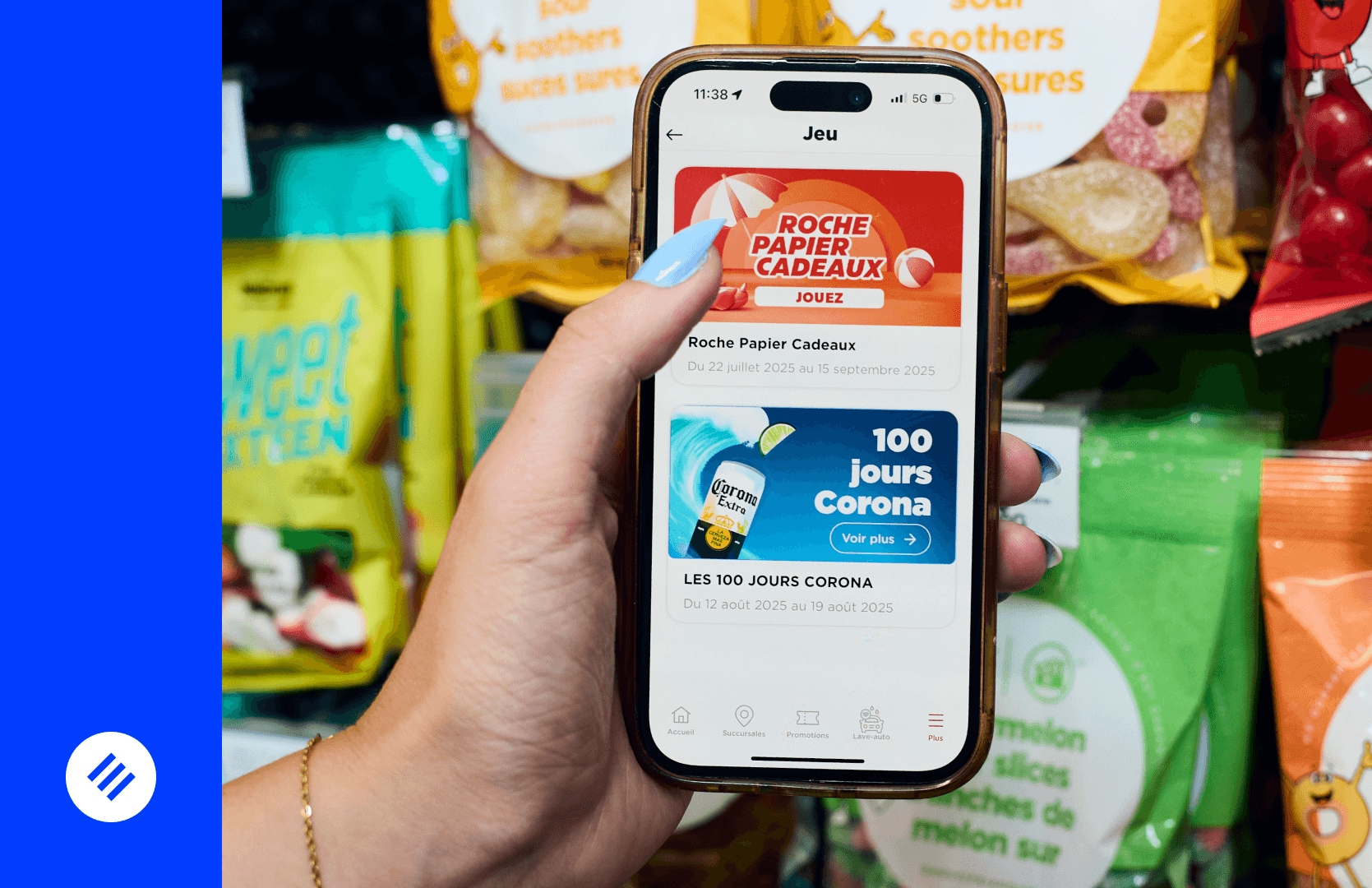
In collaboration with a major retailer, we combined mobile games with exclusive app-only coupons. In 2023, over 100,000 coupons were redeemed. That’s no coincidence—users understood the app gave them real, immediate, and reserved benefits.
Exclusivity can also take the form of experience: premium content, early access to sales, personalized services. What matters is that each interaction provides a clear “extra” to the user.
Gamification
Gamification isn’t about distracting users—it’s about creating emotional connection and making the mobile experience more lively and engaging. But it must always serve a strategic purpose.
To build stronger engagement and naturally embed an app into users’ lives, we’ve integrated seasonal mini-games into mobile applications. These not only animate the interface but also offer rewards or points to collect, encouraging regular returns and sustained use.
Beyond the numbers, what matters most is how this impacts the brand–customer relationship. A well-placed game can highlight a new feature, increase app retention, or simply extend brand presence in users’ lives without a direct sales push.
To avoid fatigue, we recommend a seasonal or event-based approach to keep things fresh and aligned with the app’s objectives.
Subscription Models
Subscription models have exploded in recent years. They offer stability for the business and create a positive routine for users—as long as the value proposition is clear.
A good subscription doesn’t just sell unlimited access—it provides a simple, logical, and cost-effective solution. With a car wash service we supported, users saw savings after just two monthly washes, making the subscription naturally appealing. This model not only achieved a 38% conversion rate but also built consistent usage habits.
Here, the app plays a key role: it’s not just the access point to the service—it becomes the user’s personal dashboard. Users can track benefits, manage preferences, and receive special offers.
Becoming Part of Your Users’ Daily Lives is a Responsibility
Building loyalty through mobile isn’t just about “creating an app.” It’s about designing a long-term relationship between a brand and its users—one based on relevance, usefulness, and deep behavioral insight.
What sets a great app apart is the intelligence behind it. A well-designed app becomes a daily companion—not just another channel to manage.
Pascale Tessier
2025-05-27
Driving Loyalty Through Mobile: Focus on Relationship and Engagement
Customer loyalty is much more complex than just offering a loyalty program or good service. Thanks to digital tools—especially mobile—the opportunities for brand interaction have multiplied. With 34% of retail transactions now happening on mobile, the digital experience has become an extension of the customer relationship. The mobile app is now a key symbol of brand closeness.
Too often, apps are seen as simple extensions of a website or as promotional tools. But what users are really looking for are useful, personalized, dynamic, and consistent experiences that integrate seamlessly into their everyday lives.
Through our work with brands that put loyalty at the core of their mobile strategy, we’ve identified four high-impact levers.
Push Notifications
Being allowed to send a push notification to a user’s phone is already a significant privilege. It’s a direct, unfiltered channel—often appearing on the lock screen, one of the most viewed screens of the day. But it’s also a sensitive space: too many or poorly targeted messages can quickly drive users to unsubscribe or delete the app.
While some may argue there’s a growing fatigue with push notifications, the truth is more nuanced. It all depends on smart personalization. By considering the time of day, season, location, and specific user behaviors, brands can capture attention at the right moment and deliver real added value.
Starbucks offers a great example of notifications used as a service, not an interruption. When a user is near a store, they may receive an exclusive offer. By combining geolocation with precise timing, the brand turns a simple alert into a tangible opportunity perfectly aligned with the user’s routine.
Exclusive Offers
Exclusive offers may seem like a simple idea, but executing them well requires a more strategic approach. An offer seen in an ad, repeated in a newsletter, and shown again in the app doesn’t feel exclusive. The mobile experience should provide what other channels can’t.
In collaboration with a major retailer, we combined mobile games with exclusive app-only coupons. In 2023, over 100,000 coupons were redeemed. That’s no coincidence—users understood the app gave them real, immediate, and reserved benefits.
Exclusivity can also take the form of experience: premium content, early access to sales, personalized services. What matters is that each interaction provides a clear “extra” to the user.
Gamification
Gamification isn’t about distracting users—it’s about creating emotional connection and making the mobile experience more lively and engaging. But it must always serve a strategic purpose.
To build stronger engagement and naturally embed an app into users’ lives, we’ve integrated seasonal mini-games into mobile applications. These not only animate the interface but also offer rewards or points to collect, encouraging regular returns and sustained use.
Beyond the numbers, what matters most is how this impacts the brand–customer relationship. A well-placed game can highlight a new feature, increase app retention, or simply extend brand presence in users’ lives without a direct sales push.
To avoid fatigue, we recommend a seasonal or event-based approach to keep things fresh and aligned with the app’s objectives.
Subscription Models
Subscription models have exploded in recent years. They offer stability for the business and create a positive routine for users—as long as the value proposition is clear.
A good subscription doesn’t just sell unlimited access—it provides a simple, logical, and cost-effective solution. With a car wash service we supported, users saw savings after just two monthly washes, making the subscription naturally appealing. This model not only achieved a 38% conversion rate but also built consistent usage habits.
Here, the app plays a key role: it’s not just the access point to the service—it becomes the user’s personal dashboard. Users can track benefits, manage preferences, and receive special offers.
Becoming Part of Your Users’ Daily Lives is a Responsibility
Building loyalty through mobile isn’t just about “creating an app.” It’s about designing a long-term relationship between a brand and its users—one based on relevance, usefulness, and deep behavioral insight.
What sets a great app apart is the intelligence behind it. A well-designed app becomes a daily companion—not just another channel to manage.
Pascale Tessier
2025-05-27
Driving Loyalty Through Mobile: Focus on Relationship and Engagement
Customer loyalty is much more complex than just offering a loyalty program or good service. Thanks to digital tools—especially mobile—the opportunities for brand interaction have multiplied. With 34% of retail transactions now happening on mobile, the digital experience has become an extension of the customer relationship. The mobile app is now a key symbol of brand closeness.
Too often, apps are seen as simple extensions of a website or as promotional tools. But what users are really looking for are useful, personalized, dynamic, and consistent experiences that integrate seamlessly into their everyday lives.
Through our work with brands that put loyalty at the core of their mobile strategy, we’ve identified four high-impact levers.
Push Notifications
Being allowed to send a push notification to a user’s phone is already a significant privilege. It’s a direct, unfiltered channel—often appearing on the lock screen, one of the most viewed screens of the day. But it’s also a sensitive space: too many or poorly targeted messages can quickly drive users to unsubscribe or delete the app.
While some may argue there’s a growing fatigue with push notifications, the truth is more nuanced. It all depends on smart personalization. By considering the time of day, season, location, and specific user behaviors, brands can capture attention at the right moment and deliver real added value.
Starbucks offers a great example of notifications used as a service, not an interruption. When a user is near a store, they may receive an exclusive offer. By combining geolocation with precise timing, the brand turns a simple alert into a tangible opportunity perfectly aligned with the user’s routine.
Exclusive Offers
Exclusive offers may seem like a simple idea, but executing them well requires a more strategic approach. An offer seen in an ad, repeated in a newsletter, and shown again in the app doesn’t feel exclusive. The mobile experience should provide what other channels can’t.
In collaboration with a major retailer, we combined mobile games with exclusive app-only coupons. In 2023, over 100,000 coupons were redeemed. That’s no coincidence—users understood the app gave them real, immediate, and reserved benefits.
Exclusivity can also take the form of experience: premium content, early access to sales, personalized services. What matters is that each interaction provides a clear “extra” to the user.
Gamification
Gamification isn’t about distracting users—it’s about creating emotional connection and making the mobile experience more lively and engaging. But it must always serve a strategic purpose.
To build stronger engagement and naturally embed an app into users’ lives, we’ve integrated seasonal mini-games into mobile applications. These not only animate the interface but also offer rewards or points to collect, encouraging regular returns and sustained use.
Beyond the numbers, what matters most is how this impacts the brand–customer relationship. A well-placed game can highlight a new feature, increase app retention, or simply extend brand presence in users’ lives without a direct sales push.
To avoid fatigue, we recommend a seasonal or event-based approach to keep things fresh and aligned with the app’s objectives.
Subscription Models
Subscription models have exploded in recent years. They offer stability for the business and create a positive routine for users—as long as the value proposition is clear.
A good subscription doesn’t just sell unlimited access—it provides a simple, logical, and cost-effective solution. With a car wash service we supported, users saw savings after just two monthly washes, making the subscription naturally appealing. This model not only achieved a 38% conversion rate but also built consistent usage habits.
Here, the app plays a key role: it’s not just the access point to the service—it becomes the user’s personal dashboard. Users can track benefits, manage preferences, and receive special offers.
Becoming Part of Your Users’ Daily Lives is a Responsibility
Building loyalty through mobile isn’t just about “creating an app.” It’s about designing a long-term relationship between a brand and its users—one based on relevance, usefulness, and deep behavioral insight.
What sets a great app apart is the intelligence behind it. A well-designed app becomes a daily companion—not just another channel to manage.
Other articles





Other articles
Other articles
contact@thirdbridge.ca
+1 514 316 5399
1751 Rue Richardson Bureau 5.120, Montréal, QC H3K 1G6
330 Rue Saint-Vallier E suite 330, Québec, QC G1K
1475 North Scottsdale Road, Suite 200, Scottsdale, AZ 85257
contact@thirdbridge.ca
+1 514 316 5399
1751 Rue Richardson Bureau 5.120, Montréal, QC H3K 1G6
330 Rue Saint-Vallier E suite 330, Québec, QC G1K
1475 North Scottsdale Road, Suite 200, Scottsdale, AZ 85257
contact@thirdbridge.ca
+1 514 316 5399
1751 Rue Richardson Bureau 5.120, Montréal, QC H3K 1G6
330 Rue Saint-Vallier E suite 330, Québec, QC G1K
1475 North Scottsdale Road, Suite 200, Scottsdale, AZ 85257