Fondation du Centre jeunesse
Summary
The Fondation du Centre jeunesse de la Montérégie (FCJM) supports young people living under youth protection. Every summer, its "La Rentrée en Beauté" campaign matches donors from across the Montérégie region with these youths so that each one receives a personalized backpack full of school supplies. In 2026, the campaign reached a record scale: 937 youths registered and nearly 400 donor sign-ups arriving in waves throughout the summer. Thirdbridge volunteered to help this small, non-technical team go from days of manual matching to a self-serve, one-click tool built with Claude.
Industry
Non-profit
Company size
Small team
Services used
AI
Web development
Digital Strategy
User research
Year
2026


The challenge
Behind every backpack is a match: honouring the number of bags each donor pledged, respecting their preferences (gender, grade level, favourite colours), producing a personalized PDF sheet for each youth, filing it by donor, attaching the right school-supply list for that grade, and then preparing labels sorted by city for distribution.
All of it was done by hand. Each batch of donors tied up the team for days, with a risk of error at every step, and one non-negotiable constraint: a youth's first name must never appear on a document handed to a donor.
"AI was a big mystery to me, as it was for everyone at the Foundation. But yes, we wanted to learn how to do this ourselves," says Cynthia Dufort, Events Coordinator.
The challenge
Behind every backpack is a match: honouring the number of bags each donor pledged, respecting their preferences (gender, grade level, favourite colours), producing a personalized PDF sheet for each youth, filing it by donor, attaching the right school-supply list for that grade, and then preparing labels sorted by city for distribution.
All of it was done by hand. Each batch of donors tied up the team for days, with a risk of error at every step, and one non-negotiable constraint: a youth's first name must never appear on a document handed to a donor.
"AI was a big mystery to me, as it was for everyone at the Foundation. But yes, we wanted to learn how to do this ourselves," says Cynthia Dufort, Events Coordinator.
The challenge
Behind every backpack is a match: honouring the number of bags each donor pledged, respecting their preferences (gender, grade level, favourite colours), producing a personalized PDF sheet for each youth, filing it by donor, attaching the right school-supply list for that grade, and then preparing labels sorted by city for distribution.
All of it was done by hand. Each batch of donors tied up the team for days, with a risk of error at every step, and one non-negotiable constraint: a youth's first name must never appear on a document handed to a donor.
"AI was a big mystery to me, as it was for everyone at the Foundation. But yes, we wanted to learn how to do this ourselves," says Cynthia Dufort, Events Coordinator.
The solution
Thirdbridge supported the Foundation on a volunteer basis, using Claude Code as the development tool, in three stages.
Automate first, locally. The first batches were processed with scripts built using Claude Code: robust parsing of form exports, a matching algorithm that enforces the business rules (the number of bags is absolute; preferences are honoured as closely as possible), and generation of anonymized PDF sheets. One batch of 61 donors and 197 bags was matched in a single morning.
Make the team self-sufficient. Rather than creating a dependency on a consultant, the final solution lives where the team already works: its master Google Sheets file. An Apps Script module adds a complete menu: match new donors, generate the PDF sheets directly in the shared Drive (filed by donor, with the supply list for the right grade), and produce labels in each city's official colours. A single click is all it takes: if Google's execution limits kick in, the tool resumes on its own and confirms completion by email.
Put AI in the right place. Donors' free-text comments ("two bags for elementary-school girls, pastel tones") are interpreted by Claude (Haiku model) directly from Google Sheets, which pre-fills structured preferences that the team validates before matching. Operating cost: about one cent per batch. And by design, no data about the youths is ever sent to the AI; only the donors' comments are.
The results. Days reduced to minutes: matching a full batch of donors now takes one click, preferences included. Document production is industrialized: 70 anonymized PDF sheets were generated in a single unattended session during validation testing, filed in the Drive with the right school supplies. Roughly 700 youths were matched by the end of July, in strict compliance with every donor's commitments. Confidentiality is preserved end to end: the sheets handed to donors are anonymous, and access to the youths' data stays confined to the Foundation's team. Above all, the Foundation runs the tool on its own, trains its own colleagues, and is already preparing its next campaign, the Christmas Baskets, on the same foundations.
"I'm impressed. This is everything we used to do by hand, every single time," said Cynthia Dufort as she watched the tool generate the sheets. "Everything seems to be working really well. We can't wait to try it from A to Z!"
The biggest win in this project isn't technological, it's human: every hour reclaimed from paperwork is an hour given back to the mission. And the best automation isn't the one a consultant runs for you; it's the one your team owns, understands, and keeps alive itself.
Project carried out on a volunteer basis by Thirdbridge for the Fondation du Centre jeunesse de la Montérégie, June–July 2026. Tools: Claude Code, Claude API (Haiku 4.5), Google Sheets and Apps Script.

The solution
Thirdbridge supported the Foundation on a volunteer basis, using Claude Code as the development tool, in three stages.
Automate first, locally. The first batches were processed with scripts built using Claude Code: robust parsing of form exports, a matching algorithm that enforces the business rules (the number of bags is absolute; preferences are honoured as closely as possible), and generation of anonymized PDF sheets. One batch of 61 donors and 197 bags was matched in a single morning.
Make the team self-sufficient. Rather than creating a dependency on a consultant, the final solution lives where the team already works: its master Google Sheets file. An Apps Script module adds a complete menu: match new donors, generate the PDF sheets directly in the shared Drive (filed by donor, with the supply list for the right grade), and produce labels in each city's official colours. A single click is all it takes: if Google's execution limits kick in, the tool resumes on its own and confirms completion by email.
Put AI in the right place. Donors' free-text comments ("two bags for elementary-school girls, pastel tones") are interpreted by Claude (Haiku model) directly from Google Sheets, which pre-fills structured preferences that the team validates before matching. Operating cost: about one cent per batch. And by design, no data about the youths is ever sent to the AI; only the donors' comments are.
The results. Days reduced to minutes: matching a full batch of donors now takes one click, preferences included. Document production is industrialized: 70 anonymized PDF sheets were generated in a single unattended session during validation testing, filed in the Drive with the right school supplies. Roughly 700 youths were matched by the end of July, in strict compliance with every donor's commitments. Confidentiality is preserved end to end: the sheets handed to donors are anonymous, and access to the youths' data stays confined to the Foundation's team. Above all, the Foundation runs the tool on its own, trains its own colleagues, and is already preparing its next campaign, the Christmas Baskets, on the same foundations.
"I'm impressed. This is everything we used to do by hand, every single time," said Cynthia Dufort as she watched the tool generate the sheets. "Everything seems to be working really well. We can't wait to try it from A to Z!"
The biggest win in this project isn't technological, it's human: every hour reclaimed from paperwork is an hour given back to the mission. And the best automation isn't the one a consultant runs for you; it's the one your team owns, understands, and keeps alive itself.
Project carried out on a volunteer basis by Thirdbridge for the Fondation du Centre jeunesse de la Montérégie, June–July 2026. Tools: Claude Code, Claude API (Haiku 4.5), Google Sheets and Apps Script.
The solution
Thirdbridge supported the Foundation on a volunteer basis, using Claude Code as the development tool, in three stages.
Automate first, locally. The first batches were processed with scripts built using Claude Code: robust parsing of form exports, a matching algorithm that enforces the business rules (the number of bags is absolute; preferences are honoured as closely as possible), and generation of anonymized PDF sheets. One batch of 61 donors and 197 bags was matched in a single morning.
Make the team self-sufficient. Rather than creating a dependency on a consultant, the final solution lives where the team already works: its master Google Sheets file. An Apps Script module adds a complete menu: match new donors, generate the PDF sheets directly in the shared Drive (filed by donor, with the supply list for the right grade), and produce labels in each city's official colours. A single click is all it takes: if Google's execution limits kick in, the tool resumes on its own and confirms completion by email.
Put AI in the right place. Donors' free-text comments ("two bags for elementary-school girls, pastel tones") are interpreted by Claude (Haiku model) directly from Google Sheets, which pre-fills structured preferences that the team validates before matching. Operating cost: about one cent per batch. And by design, no data about the youths is ever sent to the AI; only the donors' comments are.
The results. Days reduced to minutes: matching a full batch of donors now takes one click, preferences included. Document production is industrialized: 70 anonymized PDF sheets were generated in a single unattended session during validation testing, filed in the Drive with the right school supplies. Roughly 700 youths were matched by the end of July, in strict compliance with every donor's commitments. Confidentiality is preserved end to end: the sheets handed to donors are anonymous, and access to the youths' data stays confined to the Foundation's team. Above all, the Foundation runs the tool on its own, trains its own colleagues, and is already preparing its next campaign, the Christmas Baskets, on the same foundations.
"I'm impressed. This is everything we used to do by hand, every single time," said Cynthia Dufort as she watched the tool generate the sheets. "Everything seems to be working really well. We can't wait to try it from A to Z!"
The biggest win in this project isn't technological, it's human: every hour reclaimed from paperwork is an hour given back to the mission. And the best automation isn't the one a consultant runs for you; it's the one your team owns, understands, and keeps alive itself.
Project carried out on a volunteer basis by Thirdbridge for the Fondation du Centre jeunesse de la Montérégie, June–July 2026. Tools: Claude Code, Claude API (Haiku 4.5), Google Sheets and Apps Script.
You might also like exploring similar projects.

ReliOn
EV charging station optimization platform
See project
ReliOn
EV charging station optimization platform
See project
Archi App
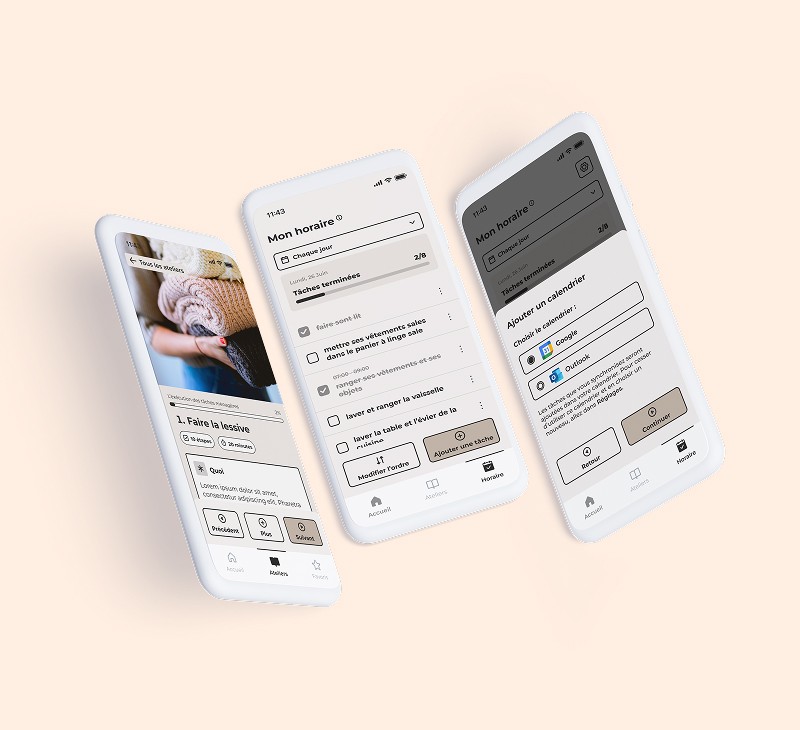
Digital support for independent living workshops
See project
Archi App
Digital support for independent living workshops
See project
Vet et nous
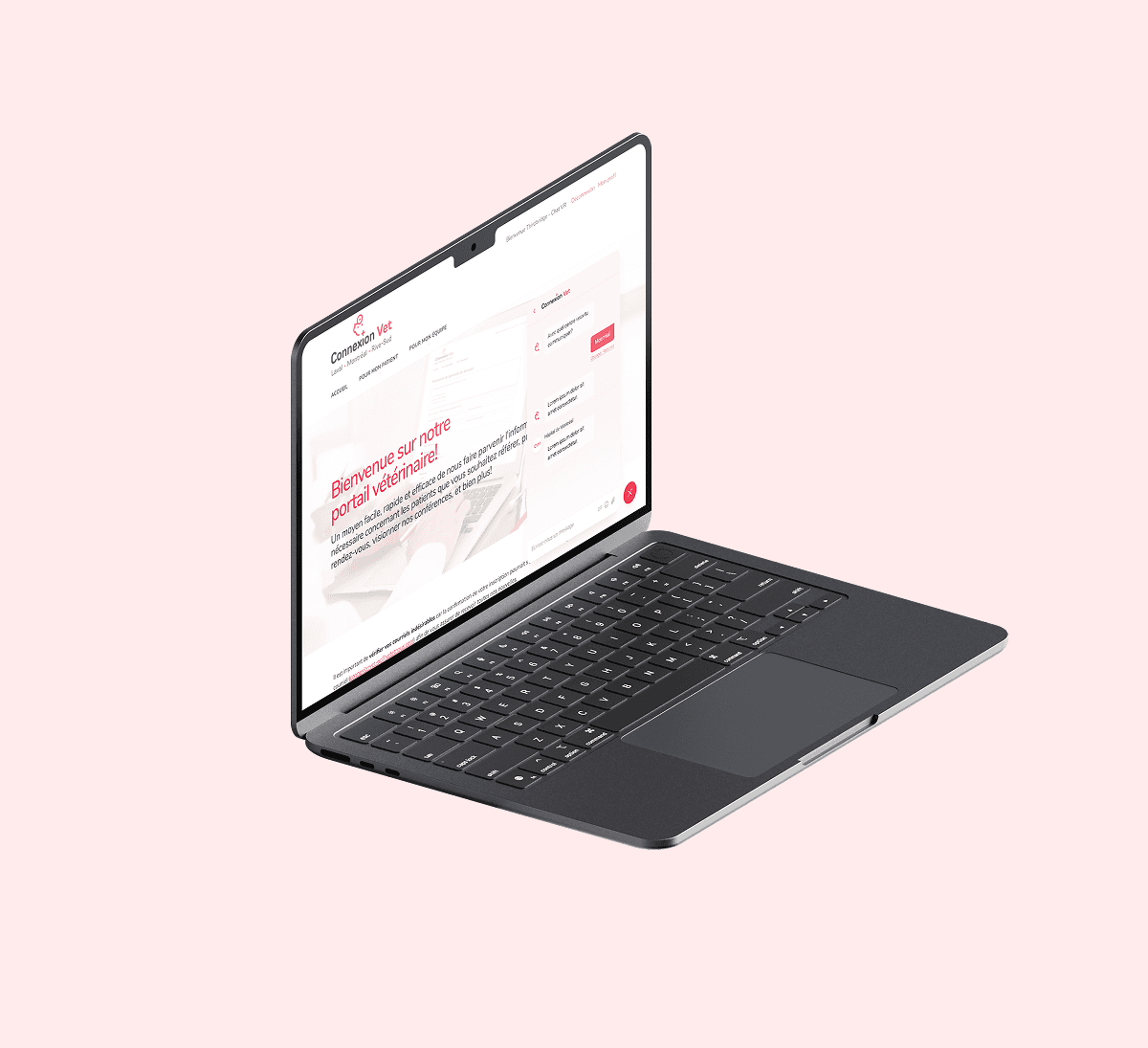
Virtual assistant designed to facilitate communication between specialists.
See project
Vet et nous
Virtual assistant designed to facilitate communication between specialists.
See project
Solutions numériques
contact@thirdbridge.ca
+1 514 316 5399
1751 Rue Richardson Bureau 5.120, Montréal, QC H3K 1G6
330 Rue Saint-Vallier E suite 330, Québec, QC G1K
1475 North Scottsdale Road, Suite 200, Scottsdale, AZ 85257
Solutions numériques
contact@thirdbridge.ca
+1 514 316 5399
1751 Rue Richardson Bureau 5.120, Montréal, QC H3K 1G6
330 Rue Saint-Vallier E suite 330, Québec, QC G1K
1475 North Scottsdale Road, Suite 200, Scottsdale, AZ 85257
Solutions numériques
contact@thirdbridge.ca
+1 514 316 5399
1751 Rue Richardson Bureau 5.120, Montréal, QC H3K 1G6
330 Rue Saint-Vallier E suite 330, Québec, QC G1K
1475 North Scottsdale Road, Suite 200, Scottsdale, AZ 85257